


Quicky: mobile checkout optimization for higher conversion


About Quicky
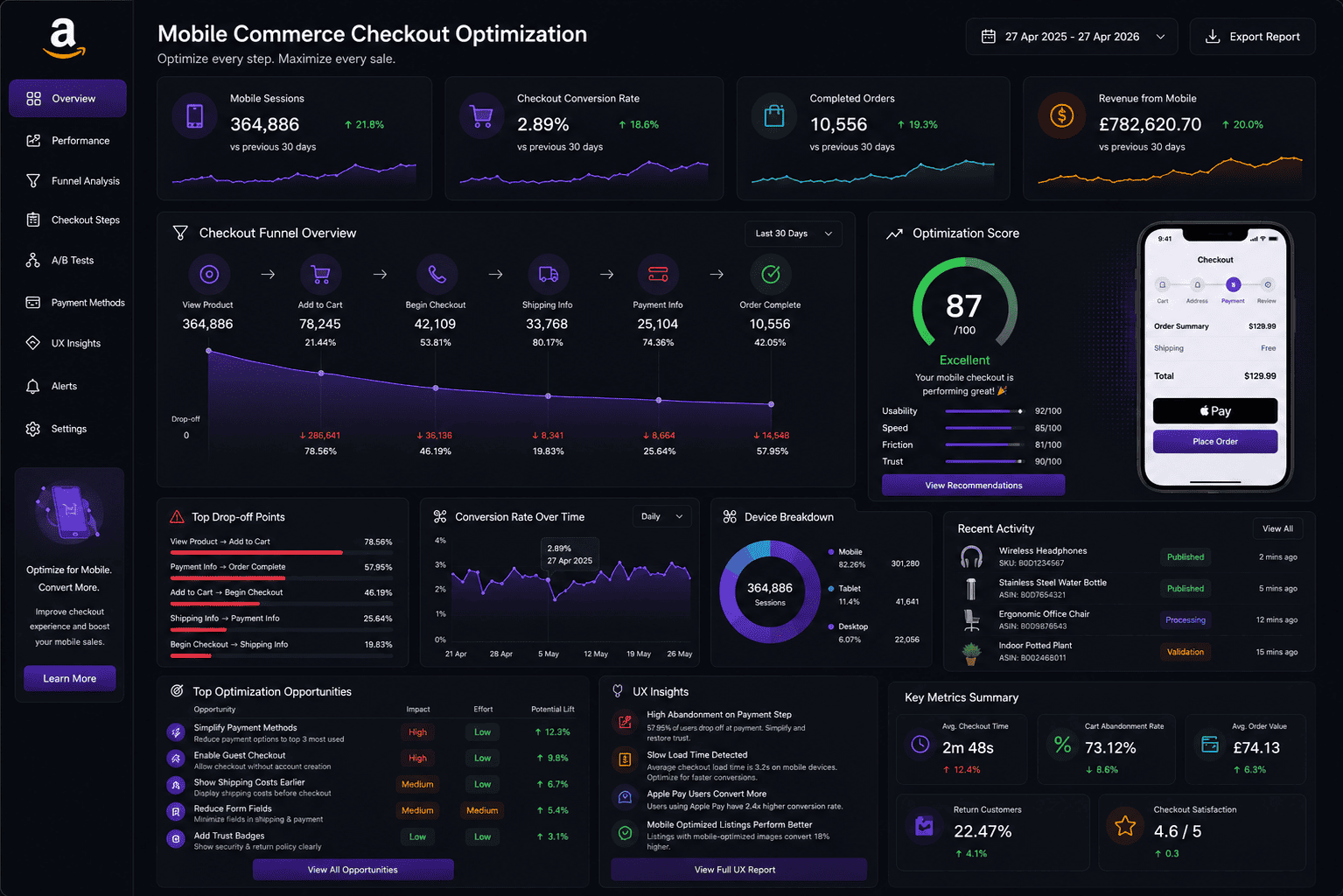
Quicky was focused on a part of commerce where small friction points matter a lot: mobile checkout. The business had a strong convenience-driven offer, but mobile users were still dropping out of the funnel before purchase completion more often than they should have been.
That made the problem highly commercial. Every extra moment of hesitation on mobile meant revenue leakage, weaker paid traffic efficiency, and less confidence in how aggressively the brand could scale acquisition.
Where users were losing momentum
The funnel had too many moments that slowed people down. Some of that came from the sequencing of information, some from trust and clarity, and some from the way the checkout flow handled urgency without reducing uncertainty for the user.
On desktop, those issues might have been tolerable. On mobile, they were expensive. Smaller screens amplify clutter, weak hierarchy, and avoidable form friction, especially for users already making fast purchase decisions in short browsing sessions.
- Checkout flow contained unnecessary hesitation points.
- Key trust and clarity signals appeared too late.
- Mobile conversion efficiency was below its potential.
How we optimized the experience
Emjeez treated the checkout as a conversion system rather than a static page. We reviewed step sequence, field load, action visibility, reassurance cues, and the overall rhythm of the mobile purchase journey so the path to completion felt lighter and more obvious.
The work was designed to support real purchase behavior. Instead of adding more persuasion everywhere, we focused on removing friction at the precise moments where users were most likely to pause, rethink, or abandon.
Why the changes worked
Mobile conversion improves when cognitive effort drops and confidence rises at the same time. By simplifying decision flow, improving layout hierarchy, and strengthening the right signals in the right places, Quicky gained a checkout experience that helped more users finish what they had already started.
This also made the broader funnel healthier. Stronger checkout performance improves the economics of paid traffic, lifts the value of returning sessions, and creates a better base for retention because the first transaction experience feels more dependable.
Business impact
The end result was a cleaner mobile revenue path. Quicky could reduce wasted demand, improve conversion efficiency, and support a more trustworthy customer experience without needing to lean harder on discounting or acquisition volume alone.
For the team, the biggest gain was confidence in the funnel. Mobile commerce stopped feeling like a leak to patch and started acting more like a scalable channel with clearer performance logic behind it.
Turn your ideas into impactful solutions like them!
Have a Project? Let’s talk!


"Emjeez removed checkout friction and improved our mobile purchase flow. Conversion, trust, and repeat usage all improved."